

Design for The Light
The best way to design windows for great light is to start with the lot. Map the sun path, place primary rooms to receive north/east light, use porches and overhangs to control southern exposure, and avoid large west-facing windows. Window placement and shading create bright interiors without overheating.Let me break down how I think about it when we design a home.
________________________________
1) Step One: Orient the House Before You “Design” the House
Before we talk window styles or sizes, we have to answer a few basic questions:
Where does the sun rise and set on this lot?
What side has the best view?
Where do you want morning light (kitchen, breakfast, bedroom)?
Where do you not want harsh afternoon sun (living room, big gathering spaces)?
Where are you getting privacy from neighbors and the street?
A home can have beautiful windows and still feel gloomy or overheated if orientation is wrong.
2) The Most Reliable Light Is Not the Flashiest
Not all daylight feels the same.
North light
Soft, steady, consistent
Great for living spaces, studios, offices
Doesn’t create harsh glare
East light
Morning sun = cheerful, bright, “fresh”
Perfect for kitchens and breakfast spaces
Easy to shade later in the day
South light
Can be amazing if controlled
Works well with porches, deep overhangs, and shade strategies
If uncontrolled, it can turn into heat and glare
West light
The troublemaker
In Mississippi, west sun can absolutely cook a room in the afternoon
Needs shade, careful sizing, or strategic placement
If you take nothing else from this: be cautious with big west-facing glass.
3) A Mississippi Rule: Shade Is Not Optional
In our climate, good window design isn’t just about light — it’s about comfort.
That means planning for:
Porches and roof overhangs
Shaded courtyards
Trees (seriously… trees are HVAC equipment in disguise)
Window placement that avoids blasting afternoon sun into the main living spaces
A well-designed house can feel bright without feeling like a greenhouse.
4) Window Placement Beats Window Quantity
People often ask, “Should we add more windows?”
Sometimes. But often the better question is:
“Are the windows placed where they’ll actually pull light deep into the house?”
A few tricks that work really well:
Higher windows bring light farther into a room
Aligning window heads creates calm, ordered interiors
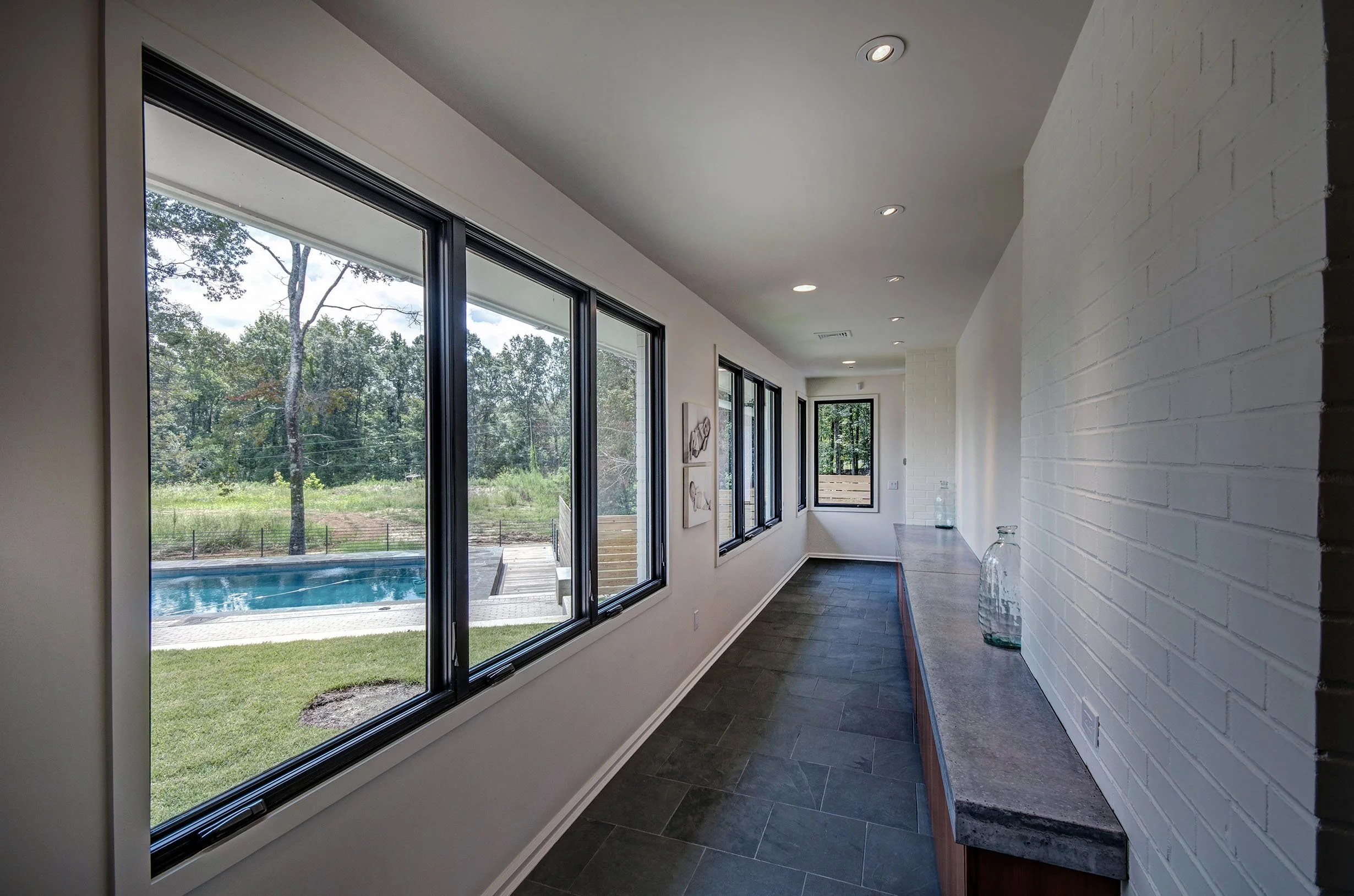
Windows placed at the end of a hallway can “pull” you through a space
Borrowed light (interior glass, transoms) can brighten darker zones without turning your home into a glass box
5) Design Windows to Frame Views (Not Just Brightness)
This is the part that makes a home feel intentional.
A great window doesn’t just “let light in.” It frames something.
A porch view to trees
A courtyard
A vista termination from the entry
A stair landing that catches treetops or sky
When windows are composed like that, your house feels designed — not just built.
6) Don’t Forget Nighttime
This might sound random, but it matters.
A house that looks great in daylight can feel like a cave at night if we don’t plan for:
layered lighting
warm temperatures
fixtures that complement what the windows are doing during the day
The goal is a house that feels good at 8am and 8pm.
Bottom Line
If you want great natural light, comfort, and a home that “settles” into the site, start here:
Orient the house to the sun, then design windows to control light, frame views, and keep the home comfortable in the Mississippi heat.
Bigger glass isn’t the goal. Better light is.